

by First Give
Building momentum from the moment: unlocking lifelong philanthropic citizenship
Introducing a new external evaluation of the First Give Programme

Over the weekend First Give was delighted to partner with the Big Help Out and Big Lunch with Eden. The weekend marked the culmination of Volunteers’ Week – a national moment of collective action. Across the country, tens of thousands of people stepped forward to give their time: volunteering in their communities, supporting local causes, and, for many, taking part for the first time.
These moments introduce people to giving. They demonstrate the impact of social action on a grand scale. They remind us that, in spite of ever-present doom and gloom headlines, people want to positively contribute to society, people care about their communities and people do give back.
For us at First Give, these moments also prompt the question of how we move from moments of participation to sustained, lifelong engagement?
The challenge: from participation to citizenship
Across policy, research and practice, there is growing recognition that one-off acts of volunteering or fundraising, while valuable, are not the key to building lasting civic habits.
Sustained participation tends to emerge when people:
- feel belonging, agency and ownership
- understand the issues they are engaging with
- experience moments of joy as they see the real-world consequences of their actions
- and begin to see themselves as contributors, not just helpers
At First Give, we call this philanthropic citizenship: sustained giving of time, money or skills for the public benefit of society. The act of giving connects us.
So, the challenge is how to build philanthropic citizenship equitably and at scale.
New evidence: what works
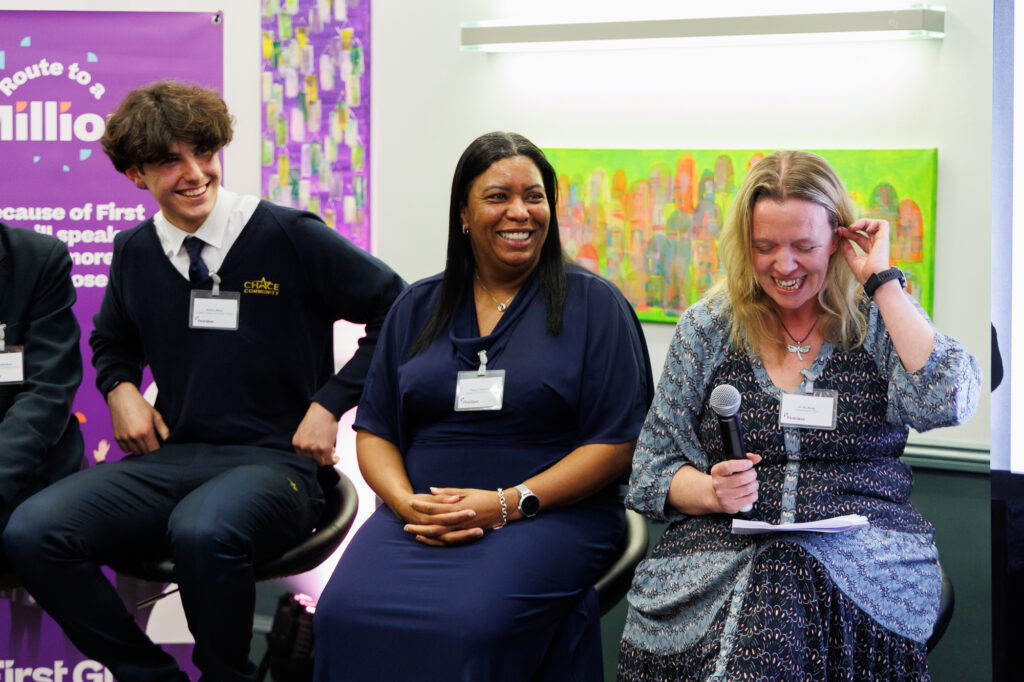
Dr Ali Body discusses the evaluation with students and headteachers
Today, we are publishing an independent evaluation of the First Give programme, led by Dr Ali Body and Natalie Johnson at Global Action Plan. Drawing on mixed-methods evidence from over 4,000 students, alumni, teachers and charity partners, the findings are clear:
1. First Give cultivates durable philanthropic citizenship
Young people who take part in the First Give Programme develop lasting awareness, agency and identity. 94% of students report increased understanding of social issues, 96% improve their understanding of local charities and crucially, these gains are sustained over time
More importantly, these shifts translate into action:
- 65% of alumni go on to further social action
- 61% attribute this directly to the programme
This is not short-term enthusiasm. It is the foundation of long-term engagement.
2. Transformational shifts in confidence and capability
Teachers consistently report significant changes in students’ confidence, purpose and civic capability. Across the evaluation it is clear that students develop strengths in key skills such as public speaking, teamwork and planning.
But beyond these skills, what stands out is agency: students begin to see themselves as people who can make a difference, whose voice matters.
3. Strengthening schools as civic institutions
School is where the majority of young people spend most of their time. Recent policy announcements from the Government in England highlight the importance of enriching experiences for all children, alongside an increased commitment to preparing them to be active and responsible citizens. The evaluation finds that the First Give Programme complements and enhances schools as civic institutions.
- 91% of teachers say it helps schools support students to tackle social issues
- 88% say it enables a more meaningful role in the local community
Focusing on local charities, students shift from abstract national concerns to tangible community engagement, strengthening their connection to place. In addition, the First Give Final acts as a “civic ritual” – recognising and celebrating the action young people have taken.
4. Building capacity across the wider philanthropic ecosystem
As well as preparing young people as philanthropic citizens, the evaluation finds that the impact extends beyond young people and schools. Charity partners report increased confidence in engaging young people:
- 87% feel more confident working with young people after taking part
The programme strengthens relationships between schools and local charities – building what the evaluation describes as the “connective tissue” of civil society.
Why this works
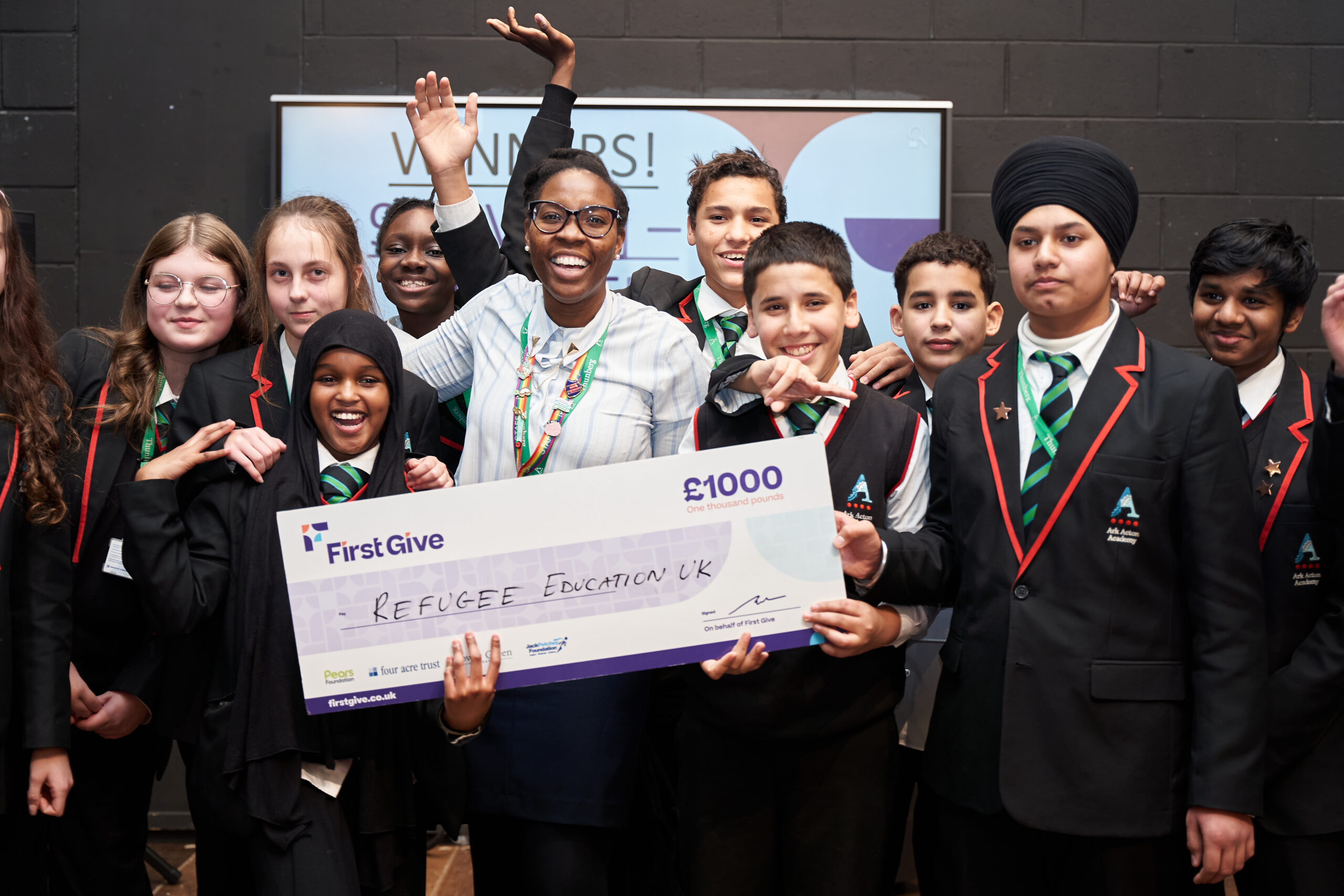
A winning class with an £1000 cheque for their chosen charity
The evaluation confirms what we have long believed at First Give. That “philanthropic citizenship develops when young people are given structured opportunities to exercise voice, deliberation and responsibility in real-world contexts.”
In the First Give model, young people:
- choose the issues that matter to them
- research and meet real charities
- deliberate collectively
- raise funds and awareness
- present and justify their decisions publicly
They are not passive participants. They are decision-makers with real responsibility; their decisions have real consequences.
Building momentum
Volunteers’ Week and the Big Help Out are critical moments in the national civic calendar. The participation of thousands of people across the country show what is possible when we create national moments of engagement. This evaluation cements First Give’s role in developing a more generous and connected society. The First Give Programme offers an evidence-aligned, scalable model ensuring that:
- opportunities are embedded in the universal setting of school;
- experiences that unlock generosity, building identity – not just activity
- opportunities are available to all young people, not just the already engaged
A call to partners
If we are serious about building a more generous society – one where everyone is able and willing to give – then this evaluation provides both credible evidence of impact and a clearer understanding of how that impact happens.
We would love to work with funders, schools, policymakers and partners to take this work further.
Download the full report here.